
1×12 Speaker Cabinet
QUASAR
"The ultra-light 1×12 that sounds huge." A compact cabinet that feels effortless to move, yet uncompromising in sound and build quality.
From €629 + VAT
Built to order • Estimated dispatch 6–8 weeks (sooner if in stock)
30-day money-back guarantee • Free return shipping across the EU & UK
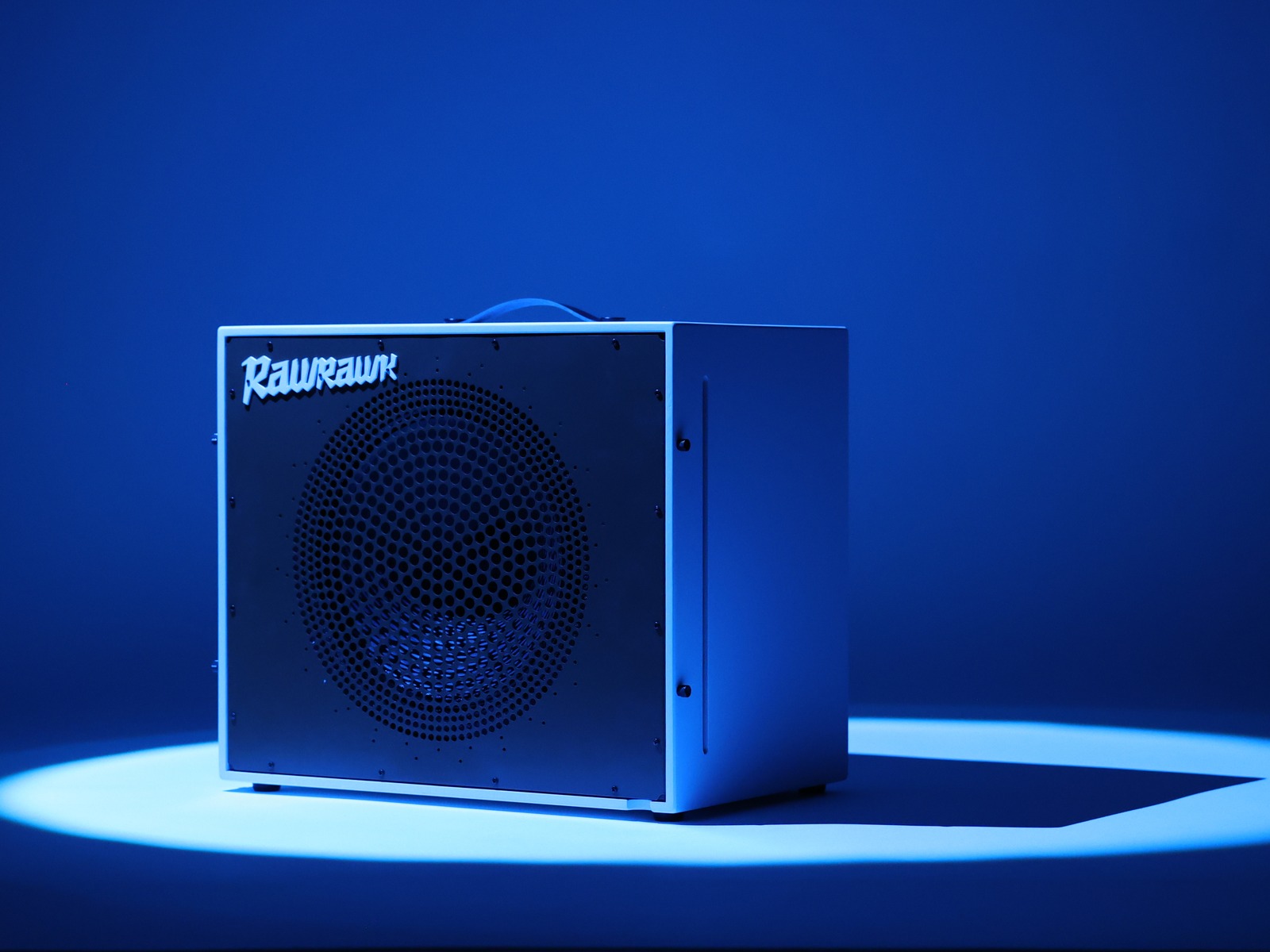
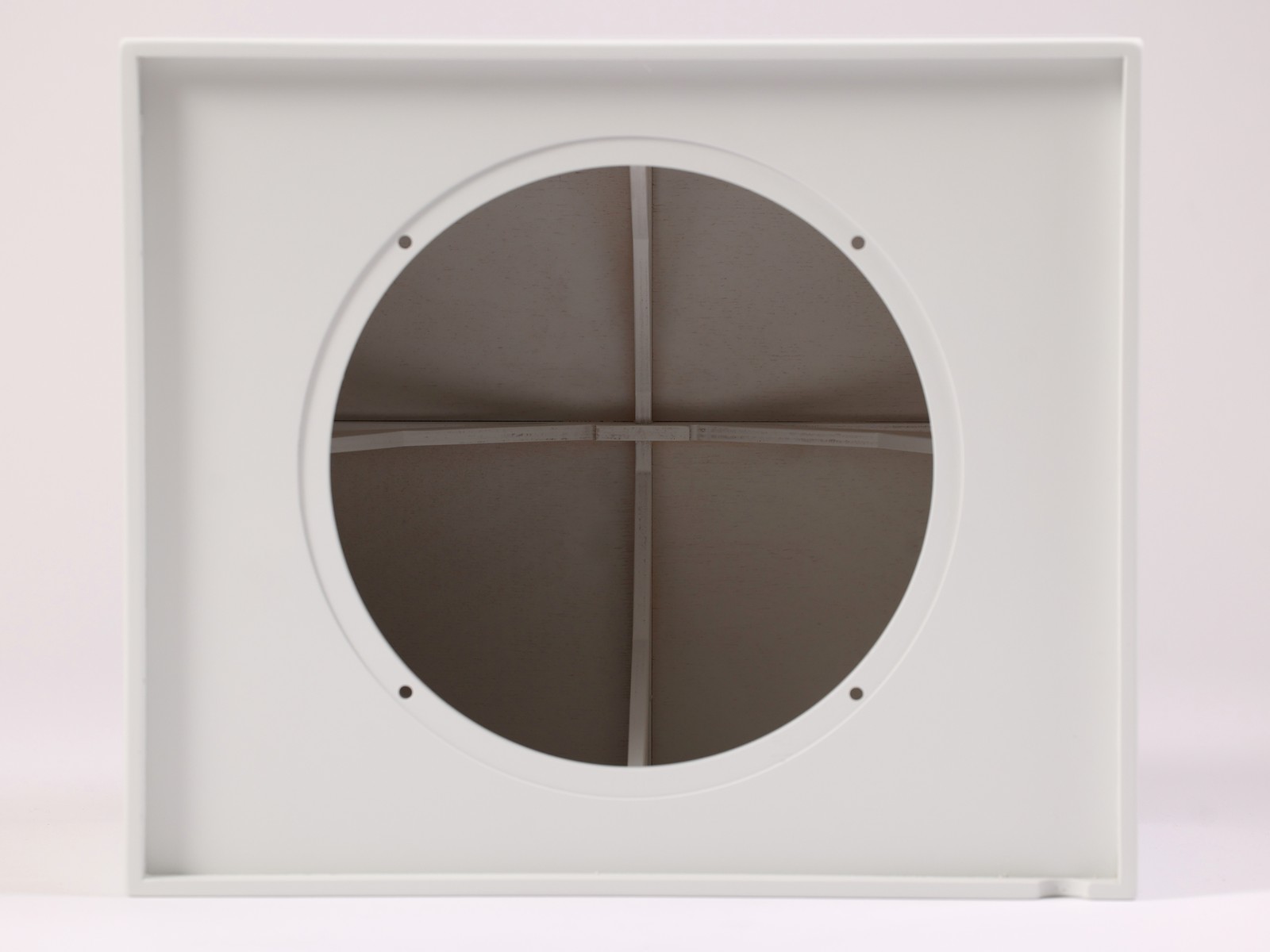
Robust yet lightweight construction
≈ 6 kg unloaded shell
At just 6 kg unloaded — typically about 8–10 kg once your speaker is fitted, depending on the driver — the 1×12 Quasar is genuinely easy to carry without compromising durability. Built from 9 mm Baltic birch plywood, it's light enough for frequent transport and robust enough for regular stage use — at home, in the studio, or on stage.
Each panel is cut with CNC precision and assembled using an interlocking construction system, increasing surface contact between panels to improve rigidity while keeping weight low. A glue-only method removes the need for screws — a cleaner exterior and a solid, rattle-free cabinet.
The outer shell is finished with a custom impact-resistant paint and sealed with an ultra-matte varnish, protecting against knocks and wear while keeping a refined, understated appearance.
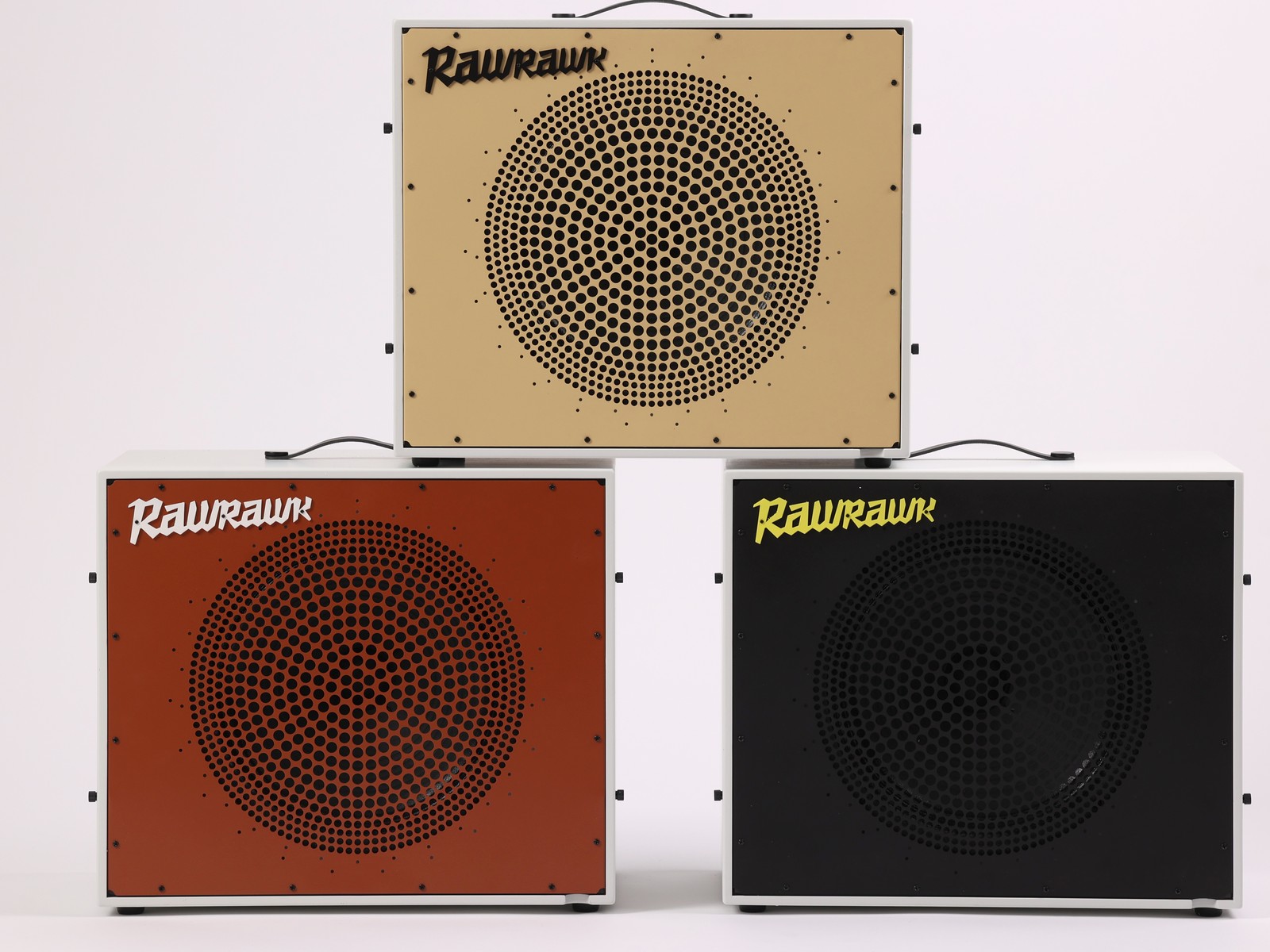
The Airframe™
The Airframe is the front structure of the Quasar — protection, rigidity, and acoustic consistency in a single integrated component. Traditional grill cloth stretches, ages unevenly, and varies from batch to batch; the Airframe removes those variables entirely.
Constructed from a powder-coated aluminium frame with a wooden core, it stays mechanically stable over time, so the sound leaving the cabinet is determined by the speaker and enclosure — not by ageing materials in front of it. It's removable via thumbscrews, with a laser-cut aluminium logo integrated into the structure.
Same structure. Same sound. Different personalities. Airframes swap freely and are available separately.
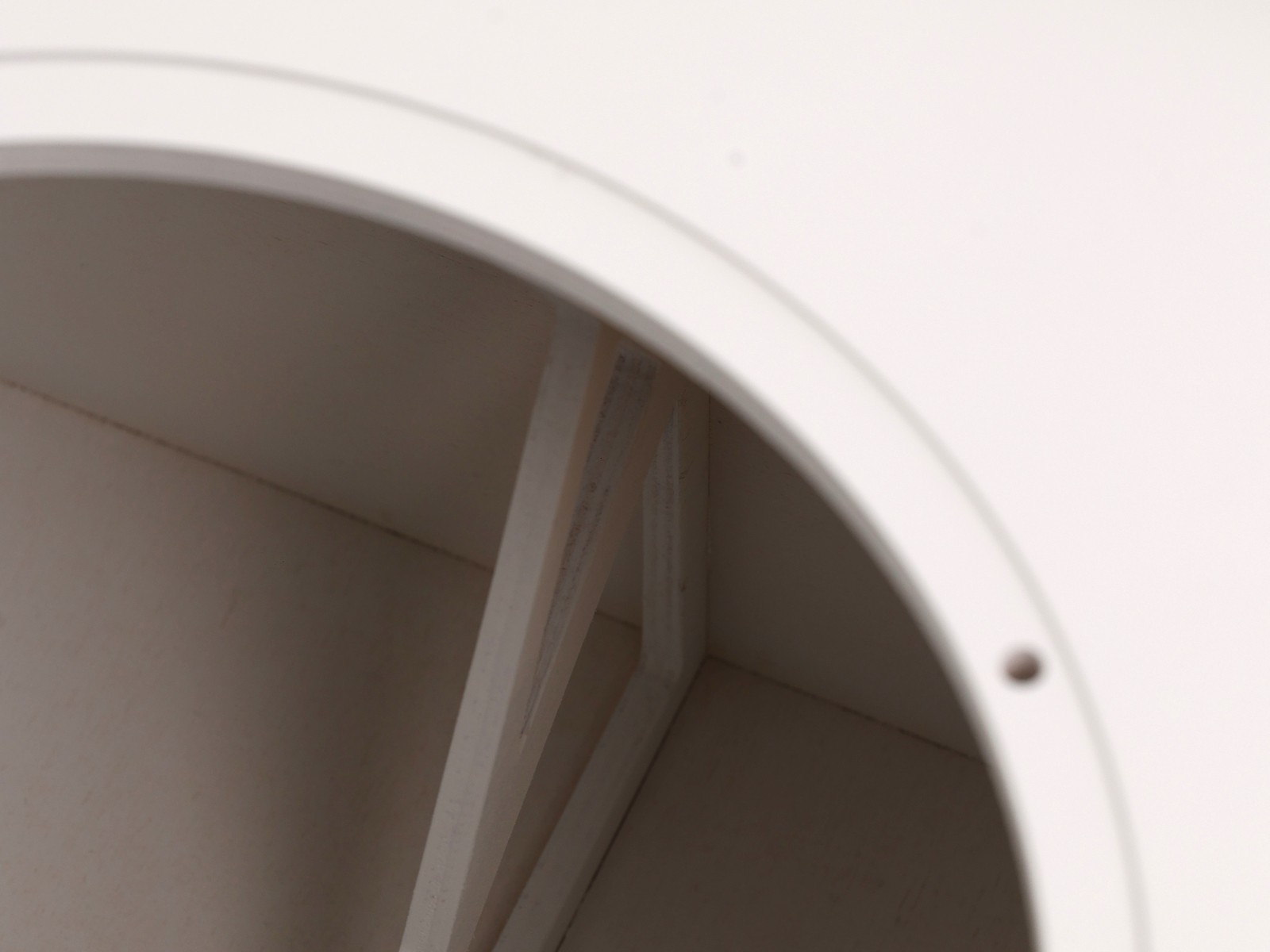
Engineered bracing system
A purpose-designed internal bracing system increases cabinet rigidity and raises its natural resonance frequencies. The two-axis bracing links the panels structurally, so they behave as a single unified system rather than independent vibrating surfaces.
Its geometry also disrupts internal wave behaviour, reducing strong standing waves inside the enclosure. The result is a lively, clean sound characterised by control and accuracy.
Dual lateral ports
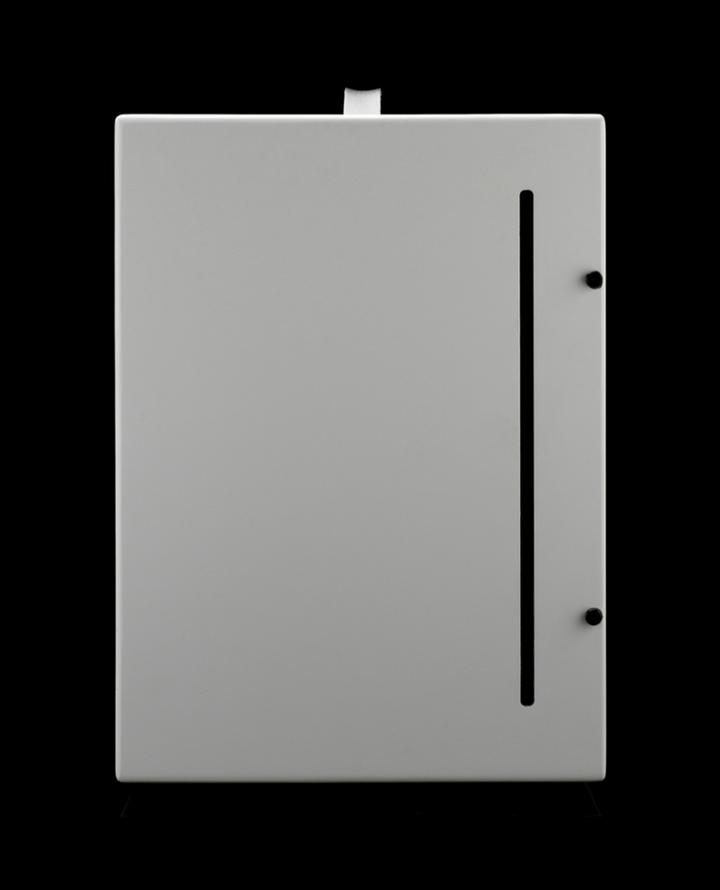
The Quasar’s dual lateral ports are a core part of how it sounds — not a styling afterthought. They’re tuned to reinforce the 80–120 Hz region, where many guitar speakers show a natural dip in output.
That gives a low end that feels fuller and more controlled than you’d expect from a compact 1×12, without the looseness that comes from poorly tuned ports. The target band is where guitar actually lives — not sub-bass that competes with the bassist and gets filtered out at FOH.
Placed on the sides rather than the front, the ports also contribute to a more open, three-dimensional feel: some higher-frequency energy still radiates and diffracts around the cabinet, so the Quasar projects with size as well as punch.
Pro connectivity & laser-engraved back
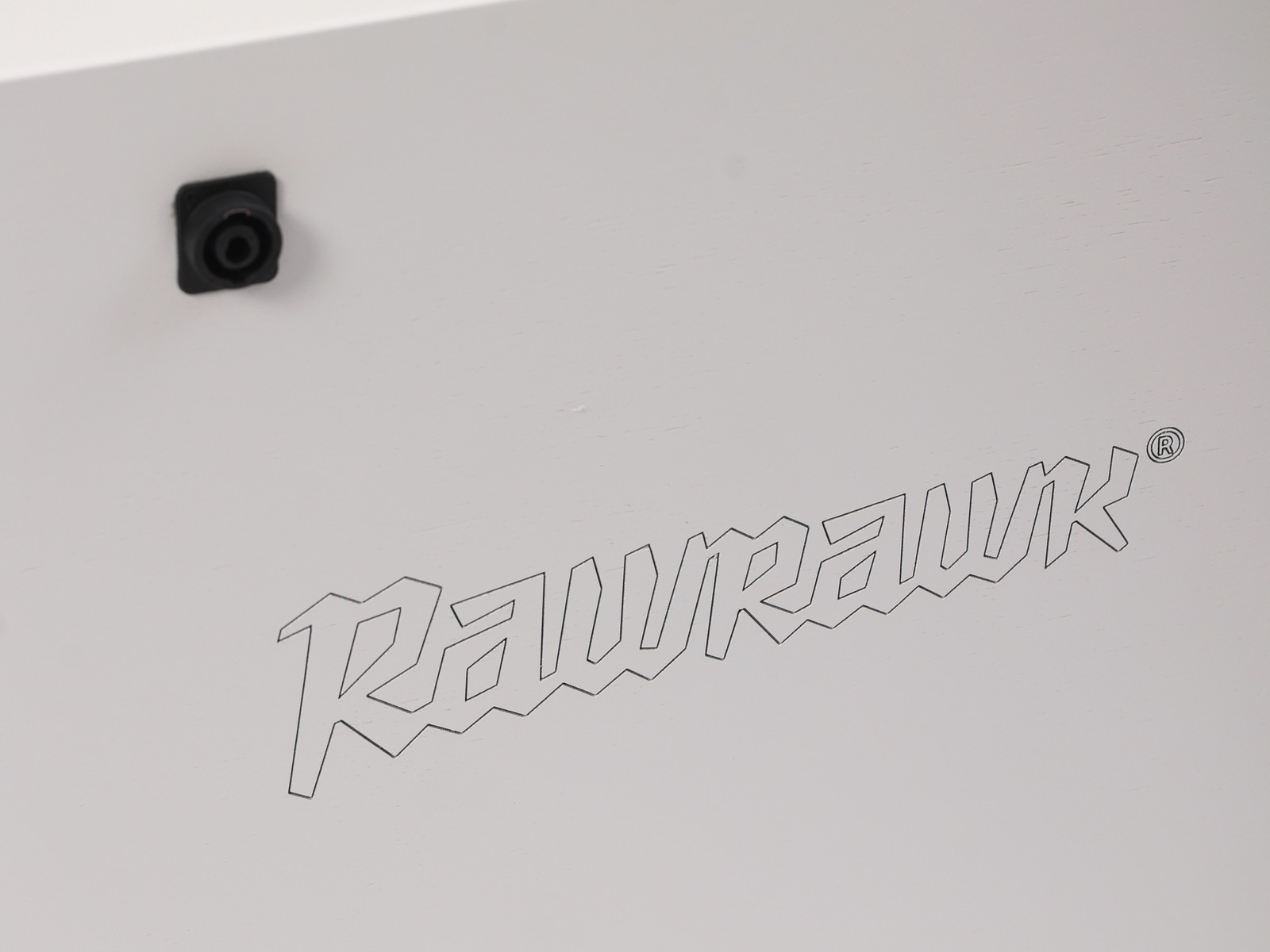
A Neutrik Speakon® combo connector accepts both standard 1/4" speaker cables and Speakon® connectors, wired internally with 2 × 2.5 mm speaker cable for a dependable, low-resistance connection that stays stable under transport and stage conditions.
The back panel is laser-engraved with the Rawrawk brand and key information — a clean, permanent finish that won't fade or peel, keeping the cabinet identifiable and professional for years.
Built for the road
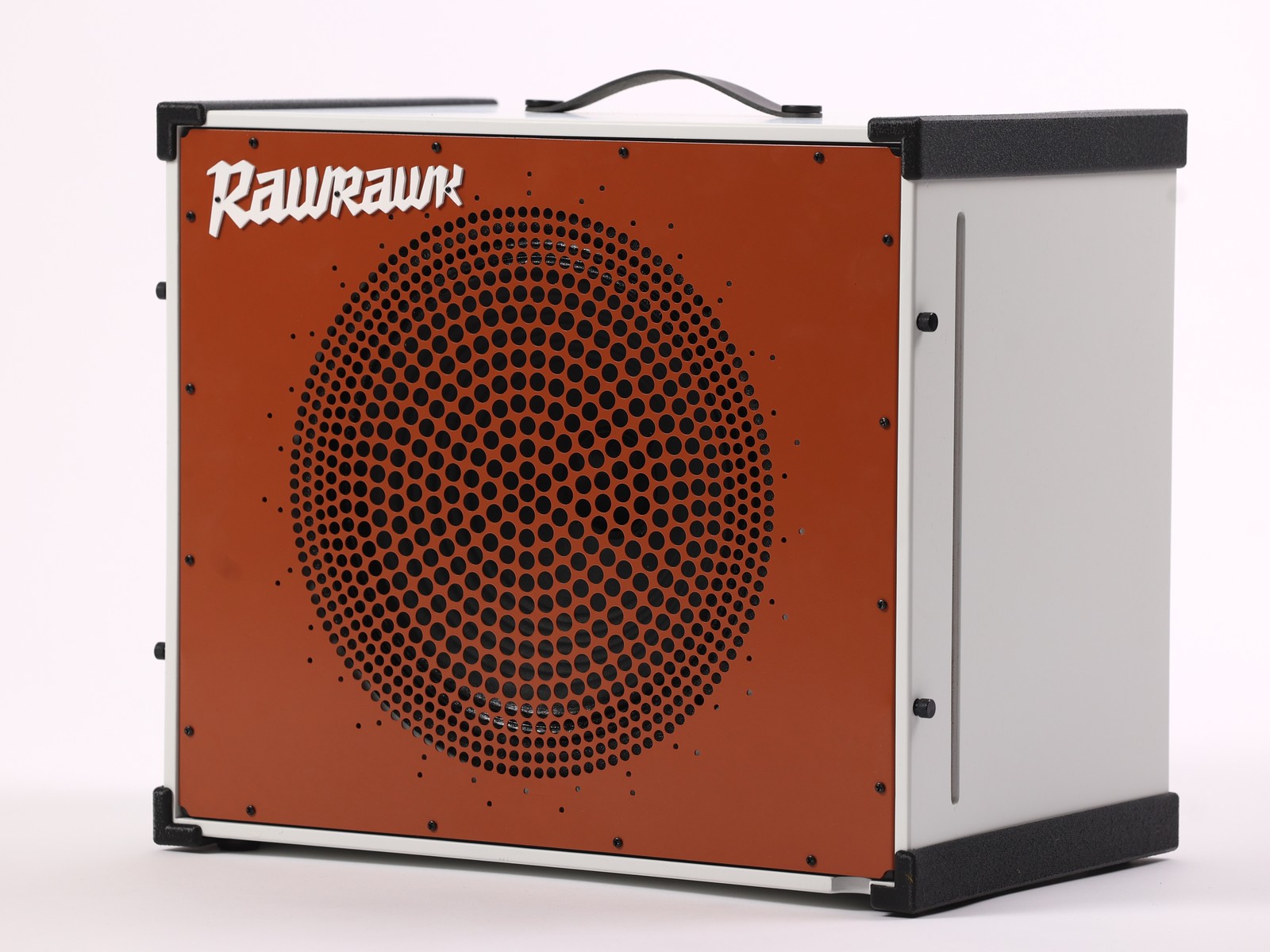
A slim leather carry handle keeps a low profile so an amplifier head sits flat on top without obstruction — durable, quiet, and integrated into the cabinet’s clean lines rather than bolted on as an afterthought.
Optional corner protectors are made from high-performance TPU (thermoplastic polyurethane), chosen for resistance to abrasion, scuffs, and impact. Unlike hard plastic corners that chip or mark easily, TPU absorbs knocks and keeps its appearance over time — discreet protection for players who move their gear often.
Drawn to scale
Quasar 1×12 dimensions
External envelope 470 × 398.5 × 295 mm (18.5 × 15.7 × 11.6 in) — compact enough for a car boot, wide enough for a head to sit flat on top.
Technical specifications
Quasar 1×12 — at a glance
| Configuration | 1×12 guitar speaker cabinet (ported) |
|---|---|
| Dimensions | 470 × 398.5 × 295 mm (W × H × D) 18.5 × 15.7 × 11.6 in |
| Weight | 6 kg / 13.2 lb unloaded Typically ~8–10 kg / 17.6–22 lb with speaker (speaker-dependent) |
| Cabinet material | 9 mm Baltic birch plywood |
| Construction | CNC-cut interlocking panels, glue-only (screwless) |
| Bracing | Engineered two-axis internal bracing system |
| Porting | Dual lateral ports, tuned 80–120 Hz |
| Front | Airframe™ — powder-coated aluminium frame + wooden core, removable via thumbscrews |
| Airframe finishes | Obsidian · Corten · Dune (swappable, sold separately) |
| Speaker options | Celestion Vintage 30 or Creamback — 8 Ω or 16 Ω; unloaded (cabinet only); other drivers on consultation when justified |
| Connector | Neutrik Speakon® combo (1/4" jack & Speakon®) |
| Internal wiring | 2 × 2.5 mm speaker cable |
| Finish | Impact-resistant paint, ultra-matte varnish; laser-engraved back panel |
| Handle | Slim leather carry handle |
| Options | Black impact-resistant TPU corner protectors; additional Airframes |
| Price | From €629 + VAT (configuration confirmed at order) |
Power-handling and final impedance follow the speaker you choose. Unsure? Pick “advise me” on the enquiry form and we’ll help.
Our science-based approach
Why cabinet design matters
The speaker makes the sound — but the cabinet decides how that energy is loaded, coloured, and released into the room.
Hi-fi systems chase a flat, linear transfer. Guitar often does not: drivers and amps are used in regions where they compress and break up on purpose. That still leaves the enclosure’s job intact. Port tuning, internal standing waves, and panel stiffness act on the air and the structure whether the waveform is clean or heavily driven.
So we do not treat the Quasar as a neutral PA box, and we do not treat it as a random wooden crate either. The goal is a relatively neutral guitar cabinet: controlled enough that swapping speakers still means something, without pretending the product is a studio monitor.
In practice that means three linked choices. Internal proportions and bracing are worked so modal energy is less likely to pile up as boxy midrange colour. Dual lateral ports support roughly the 80–120 Hz region — where many guitar speakers naturally dip — instead of chasing sub-bass that guitar rarely needs on stage.
High rigidity with low mass raises the box’s structural natural frequencies, so less of the guitar band is spent driving slow panel motion — and what you hear stays warmer, clearer, and more detailed.
Balanced yet lively. Life’s too short for boring gear.
Not ready to enquire yet?
Stay in the loop
Build notes, restocks, and the odd story from the bench. No spam — only when it’s worth writing.
Thanks — you’re on the list.
Unsubscribe anytime via hello@rawrawk.com.
Enquiry to invoice
Reserve your Quasar
Because we build in small batches and ship high-ticket items, we skip the automated cart in favour of a personal, high-quality invoice flow.
- 1Send your enquiry with product, finish, and shipping country.
- 2We reply with a personalised shipping quote and an invoice payable by card or bank transfer.
- 3Once settled, your Quasar enters the build queue — dispatch in 6–8 weeks (sooner if in stock).